Airbus A350F Completes Maiden Flight: A Major Milestone for the Next Generation of Air Cargo
Airbus A350F has completed its maiden flight, beginning a major flight-test campaign for the next generation of long-haul air cargo aircraft. With a payload of up to 111 tonnes and a range of 8,700 km, the A350F targets improved efficiency and lower emissions.
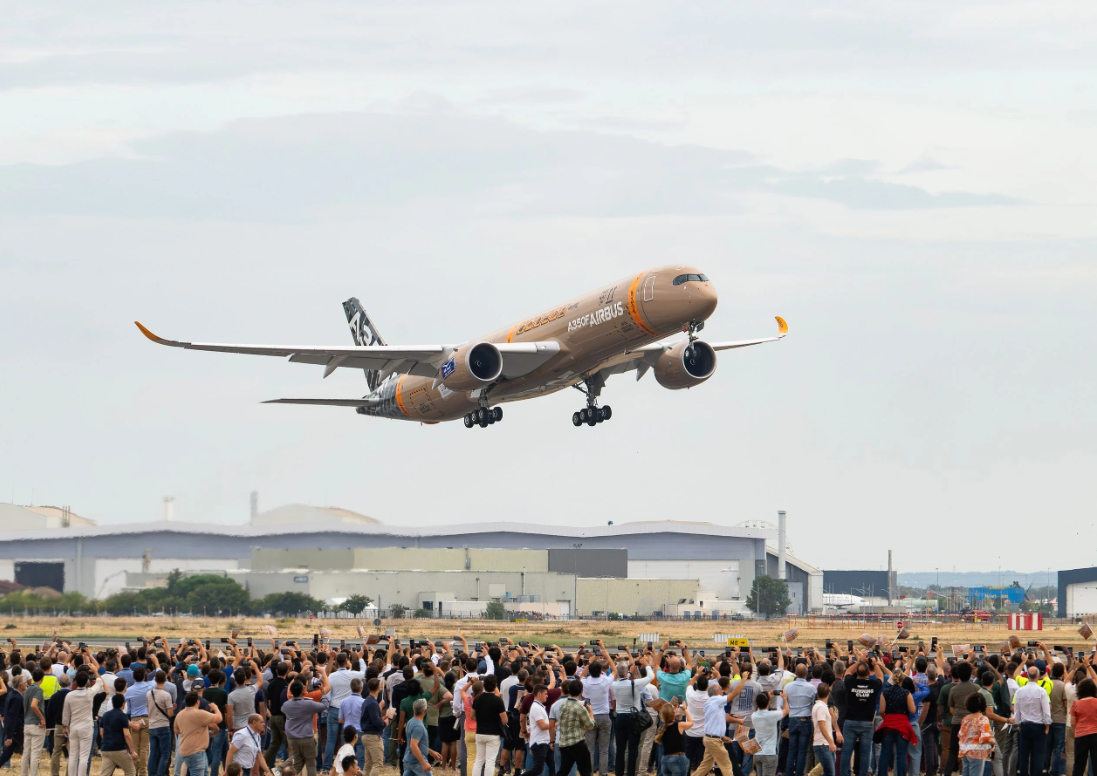
Airbus’ new-generation widebody freighter, the A350F, completed its maiden flight on September 29, 2026, marking a major milestone in the development of the company’s next-generation cargo aircraft.
The aircraft, designated MSN700, took off from Airbus’ Toulouse-Blagnac facility in France and completed a flight of approximately four hours and ten minutes before returning safely to Toulouse.
The maiden flight marks the beginning of an extensive flight-test and certification campaign designed to validate the aircraft’s performance, systems and operational capabilities.
With a planned payload capacity of up to 111 tonnes and a range of up to 8,700 kilometres, the A350F is being developed specifically for long-haul air cargo operations.
A New Chapter for Airbus in the Freighter Market
The A350F represents Airbus’ latest attempt to expand its presence in the large widebody freighter market, a segment that has traditionally been dominated by Boeing aircraft such as the 747 Freighter and 777 Freighter.
Rather than developing an entirely new aircraft architecture, Airbus has based the A350F on the existing A350 platform while making substantial modifications to meet the demanding requirements of cargo operations.
The result is a freighter designed around the combination of high payload capacity, long range and improved fuel efficiency.
According to Airbus, the A350F incorporates more than 70% advanced materials, including extensive use of composite structures inherited from the A350 family. The company says this approach contributes to a significantly lower structural weight compared with previous-generation aircraft in the same payload-range category.
For cargo operators, reducing structural weight can translate into improved fuel efficiency, additional payload flexibility and lower operating costs.
Four Hours in the Sky for the First Test Aircraft
The aircraft that performed the maiden flight, MSN700, is the first A350F test aircraft and is equipped with instrumentation designed to collect detailed flight-test data.
During the initial flight, the test crew evaluated the aircraft's handling characteristics and fundamental systems.
The aircraft climbed initially to around 10,000 feet before continuing to higher altitudes. During the flight, MSN700 reached approximately 25,000 feet and a speed of around 340 knots indicated airspeed.
Engine performance, flight controls, pressurization, communications and navigation systems were among the areas evaluated during the flight.
The aircraft subsequently returned to Toulouse after completing the planned test objectives.
Although the maiden flight is an important milestone, it represents only the beginning of the aircraft's certification campaign.
Around 400 Flight-Test Hours Planned
Airbus plans an extensive test campaign for the A350F involving approximately 400 flight hours over a period of around ten months.
The objective is to demonstrate that the aircraft meets the requirements necessary for certification and commercial operation.
Two aircraft are planned to participate in the certification campaign.
The first aircraft, MSN700, will focus on flight characteristics, performance and systems such as the autopilot.
A second test aircraft, MSN701, will be used for additional systems testing. This aircraft will allow Airbus engineers to evaluate systems including air conditioning, water and waste systems, smoke detection and other onboard equipment.
MSN701 is also expected to participate in hot- and cold-weather testing and customer demonstration activities.
This approach allows Airbus to conduct several different testing activities in parallel and accelerate the overall certification program.
111-Tonne Payload Capacity
One of the defining characteristics of the A350F is its payload capability.
Airbus lists a maximum payload of up to 111 tonnes, combined with a range of up to 8,700 kilometres.
This combination is particularly relevant to long-haul cargo operators that need to transport large quantities of freight between major global markets without relying on intermediate stops.
The aircraft is intended to carry a wide range of cargo, including standard freight containers as well as larger and heavier items.
The ability to combine substantial payload capacity with long range is one of the key requirements for modern large freighter aircraft.
Designed for Improved Fuel Efficiency
Fuel efficiency is one of the central elements of the A350F's design philosophy.
Airbus says the aircraft can deliver up to 40% lower fuel consumption and CO₂ emissions compared with previous-generation freighters in the same payload-range category.
Several technologies contribute to this objective.
The A350F benefits from the aerodynamic design of the A350 family, its extensive use of lightweight composite materials and the efficiency of its Rolls-Royce Trent XWB-97 engines.
For airlines and cargo operators, these improvements are particularly important because fuel represents one of the major operating costs of long-haul aircraft.
Lower fuel consumption can also help operators reduce the carbon intensity of cargo transportation.
Rolls-Royce Trent XWB-97 Engines
The A350F is powered by Rolls-Royce Trent XWB-97 engines, part of the Trent XWB engine family already used on the larger A350-1000 passenger aircraft.
The engine was developed specifically for the high-thrust requirements of the A350 family and provides the A350F with the power required for long-range cargo operations.
Combining the Trent XWB-97 with the A350's aerodynamic design and lightweight composite structure allows Airbus to target improved efficiency without sacrificing the payload and range required by the freighter market.
Engine performance will therefore be an important part of the aircraft's flight-test campaign.
A Large Main-Deck Cargo Door
Cargo aircraft require significantly different loading capabilities compared with passenger aircraft.
One of the most important features of the A350F is its large main-deck cargo door, which is designed to allow the loading of large and heavy freight.
The main deck is configured specifically for cargo operations rather than passenger seating, enabling operators to make use of the aircraft's large internal volume.
This capability is particularly important for specialized freight, industrial equipment and other oversized cargo that cannot easily be accommodated by conventional passenger aircraft.
The cargo-loading system and structural design will therefore be closely evaluated during the certification process.
Why the A350F Uses the A350 Platform
The decision to develop the A350F from the A350 family gives Airbus access to an established aircraft architecture and a mature technology base.
The A350 family was designed around extensive use of composite materials, advanced aerodynamics and modern flight-control systems.
These technologies can be adapted to the requirements of cargo operations.
However, converting a widebody passenger aircraft platform into a freighter is far more complicated than simply removing passenger seats.
Freighter aircraft experience different structural loads because of the concentrated weight of cargo.
The main deck, cargo floor, doors, loading systems and fuselage structure all need to be designed and tested for the requirements of heavy freight operations.
The A350F therefore incorporates substantial modifications to the A350 platform to meet these requirements.
Airbus Targets the Large Freighter Market
The introduction of the A350F places Airbus in direct competition with established large freighter aircraft.
Boeing currently has a strong presence in the market through aircraft such as the 777 Freighter and the newer 777-8 Freighter.
Airbus hopes the A350F's combination of payload, range and efficiency will provide cargo operators with an alternative to older-generation freighters.
The timing is also significant.
Many large cargo aircraft currently in service are based on designs that have been operating for decades. Airlines and cargo operators are increasingly looking toward newer aircraft with improved fuel efficiency and lower emissions.
The A350F has been developed specifically to address this transition.
Growing Customer Interest
Airbus says the A350F had accumulated 115 orders from 14 announced customers by the end of August 2026.
The order book provides the program with a customer base ahead of entry into commercial service.
Cargo airlines are increasingly considering factors beyond payload and range when evaluating new aircraft.
Fuel consumption, emissions, maintenance requirements, fleet age and operational flexibility are becoming increasingly important in fleet-planning decisions.
The A350F has been designed around these requirements.
What Happens After the Maiden Flight?
The successful maiden flight does not mean that the A350F is ready for commercial service.
The aircraft must now undergo an extensive flight-test and certification program.
Engineers will progressively expand the aircraft's operating envelope, testing it at different speeds, altitudes, weights and environmental conditions.
The aircraft's systems will also be evaluated under a wide range of scenarios.
Certification authorities will review the results to determine whether the aircraft meets the necessary safety and performance requirements.
Airbus is targeting European Union Aviation Safety Agency certification following the completion of the test campaign.
The certification phase will therefore be one of the most important stages in the A350F program.
The Future of Long-Haul Air Cargo
The air cargo industry continues to face pressure to transport freight efficiently while controlling operating costs and emissions.
Modern freighters need to provide high payload capacity and long range while consuming less fuel than previous generations.
This is where aircraft such as the A350F are expected to play an important role.
With its combination of composite construction, modern aerodynamics, advanced engines and dedicated cargo features, the A350F has been designed around the changing requirements of long-haul freight operations.
The aircraft is not simply a passenger A350 without seats. It is a dedicated freighter developed to handle the structural and operational demands of large-scale cargo transportation.
Conclusion
The September 29, 2026 maiden flight of the Airbus A350F marks the beginning of a new phase in Airbus' freighter program.
With a planned payload of up to 111 tonnes, a range of up to 8,700 kilometres, extensive composite construction and a target of up to 40% lower fuel consumption and CO₂ emissions compared with previous-generation aircraft in its category, the A350F is being positioned as a next-generation solution for long-haul air cargo.
However, the aircraft still has a substantial certification and flight-test campaign ahead.
The coming months will provide important data on whether the A350F can deliver the performance, efficiency and operational capabilities Airbus has targeted.
For now, the successful maiden flight of MSN700 represents a significant step forward.
The A350F has officially left the ground—and the next generation of Airbus freighter aircraft has entered its flight-test era.